Spring 帮助你更好的理解 Spring 循环依赖
网上关于 Spring 循环依赖的博客太多了,有很多都分析得很深入、写的很用心,甚至还画了时序图、流程图帮助读者理解。我看了后,感觉自己是懂了,但是闭上眼睛,总觉得还没有完全理解,总觉得还有一两个坎过不去。当时我就在想,如果哪一天我彻底理解了 Spring 循环依赖,一定要用自己的方式写篇博客,帮助大家更好的理解。在写本篇博客之前,我翻阅了好多关于 Spring 循环依赖的博客,网上应该还没有像我这样讲解的,现在就让我们开始吧。
一、什么是循环依赖
一言以蔽之:两者相互依赖。
在开发中,可能经常出现这种情况,只是我们平时并没有注意到原来我们写的两个类、甚至多个类相互依赖了。为什么注意不到呢?当然是因为没有报错,而且一点问题都没有。这一切都是 Spring 的功劳,它在后面默默地为我们解决了循环依赖的问题。
例如:
@Configuration
@ComponentScan
public class AppConfig {
}

@Service
public class AuthorService {
    @Autowired
    BookService bookService;
}

@Service
public class BookService {
    @Autowired
    AuthorService authorService;
}

public class Main {
    public static void main(String[] args) {
        ApplicationContext context = new AnnotationConfigApplicationContext(AppConfig.class);
        BookService bookService = (BookService) context.getBean("bookService");
        System.out.println(bookService.authorService);
        AuthorService authorService = (AuthorService) context.getBean("authorService");
        System.out.println(authorService.bookService);
    }
}
运行结果:
可以看到 BookService 中需要 AuthorService,AuthorService 中需要 BookService,类似于这样的就叫循环依赖,但是神奇的是竟然一点问题没有。
1. 任何循环依赖,Spring 都能解决吗?
不行。
如果是原型(Prototype)Bean 的循环依赖,Spring 无法解决:
@Service
@Scope(BeanDefinition.SCOPE_PROTOTYPE)
public class BookService {
    @Autowired
    AuthorService authorService;
}

@Service
@Scope(BeanDefinition.SCOPE_PROTOTYPE)
public class AuthorService {
    @Autowired
    BookService bookService;
}
启动后,控制台就会抛出循环依赖异常:
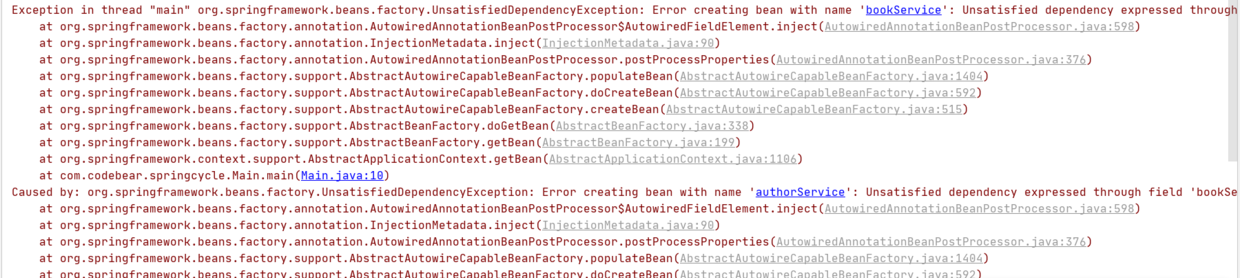
如果是构造参数注入的循环依赖,Spring 同样无法解决:
@Service
public class AuthorService {
    BookService bookService;
    public AuthorService(BookService bookService) {
        this.bookService = bookService;
    }
}

@Service
public class BookService {
    AuthorService authorService;
    public BookService(AuthorService authorService) {
        this.authorService = authorService;
    }
}
运行后同样会抛出异常:

2. 循环依赖可以关闭吗?
可以。Spring 提供了关闭循环依赖支持的功能:
public class Main {
    public static void main(String[] args) {
        AnnotationConfigApplicationContext applicationContext = new AnnotationConfigApplicationContext();
        applicationContext.setAllowCircularReferences(false);
        applicationContext.register(AppConfig.class);
        applicationContext.refresh();
    }
}
再次运行后就会直接报错:
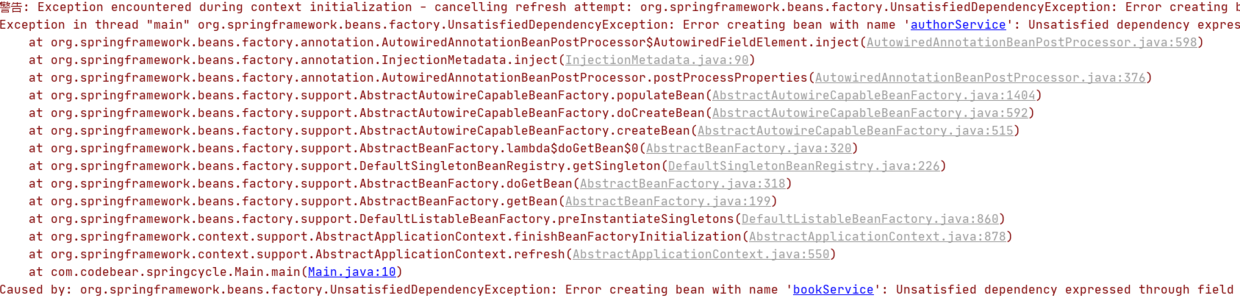
注意:不能写成
new AnnotationConfigApplicationContext(AppConfig.class)后再调用setAllowCircularReferences(false)。因为容器在构造时就已经完成初始化了,之后再设置将无法生效。
3. 循环依赖的矛盾点在哪?
当 Bean A 与 Bean B 产生循环依赖时,逻辑上的矛盾点在于:
- 创建 Bean A,发现依赖 Bean B;
- 创建 Bean B,发现依赖 Bean A;
- 创建 Bean A,发现依赖 Bean B;
- 创建 Bean B,发现依赖 Bean A……
如此一来就陷入了死循环。循环依赖的矛盾点就在于:要创建 Bean A,需要先拿到 Bean B;而要创建 Bean B,又需要先拿到 Bean A,导致两个 Bean 都无法顺利创建。
二、如何手写解决循环依赖
如果你曾经看过 Spring 解决循环依赖的博客,应该知道它其中有好几个 Map,一个 Map 存放最完整的单例对象(称为 singletonObjects),一个 Map 存放提前暴露出来的对象(称为 earlySingletonObjects)。
这两个概念的作用如下:
singletonObjects(一级缓存 / 单例池):存放经历了 Spring 完整生命周期的 Bean,这里的 Bean 属性依赖都已经填充完毕;earlySingletonObjects(二级缓存):存放刚刚实例化出来、尚未经历完整生命周期(属性尚未填充完毕)的半成品 Bean。
我们可以按照如下流程解决:
- 当创建完 Bean A 的实例后,先把半成品 A 放到
earlySingletonObjects中,发现自己需要 Bean B,于是去创建 Bean B; - 当创建完 Bean B 的实例后,把自己放到
earlySingletonObjects中,发现自己需要 Bean A,去获取 Bean A; - 获取 Bean A 时,先去
earlySingletonObjects查看,发现半成品 A 已经存在,直接返回; - Bean B 拿到了 Bean A 的引用,完成了属性填充与创建,将自己放入
singletonObjects; - Bean A 拿到 Bean B,完成了属性填充与创建,将自己放入
singletonObjects。整个过程结束。
下面我们手写代码来实现这个功能。首先自定义一个 @CodeBearAutowired 注解:
再创建两个相互依赖的类:
public class OrderService {
    @CodeBearAutowired
    public UserService userService;
}

public class UserService {
    @CodeBearAutowired
    public OrderService orderService;
}
编写核心容器与循环依赖解决逻辑:
public class Cycle {
    // 1. 单例池,里面放的是完整的 bean,已完成填充属性
    private final Map<String, Object> singletonObjects = new ConcurrentHashMap<>();
    // 2. 存放提前暴露出来的 bean,未完成填充属性
    private final Map<String, Object> earlySingletonObjects = new HashMap<>();

    static Map<String, Class<?>> map = new HashMap<>();
    static {
        map.put("orderService", OrderService.class);
        map.put("userService", UserService.class);
    }

    public void init() {
        for (Map.Entry<String, Class<?>> stringClassEntry : map.entrySet()) {
            createBean(stringClassEntry.getKey());
        }
    }

    public Object getBean(String beanName) {
        // 尝试从一级缓存 singletonObjects 中取
        Object singletonObject = this.singletonObjects.get(beanName);
        if (singletonObject != null) {
            return singletonObject;
        }
        // 尝试从二级缓存 earlySingletonObjects 中取
        singletonObject = this.earlySingletonObjects.get(beanName);
        if (singletonObject != null) {
            return singletonObject;
        }
        return createBean(beanName);
    }

    private Object createBean(String beanName) {
        Object singletonObject;
        try {
            // 实例化对象
            singletonObject = map.get(beanName).getConstructor().newInstance();
            // 把半成品放入二级缓存 earlySingletonObjects
            earlySingletonObjects.put(beanName, singletonObject);
            // 填充属性(注入依赖)
            populateBean(singletonObject);
            // 经历完整生命周期后,放入一级缓存 singletonObjects
            this.singletonObjects.put(beanName, singletonObject);
            return singletonObject;
        } catch (Exception ignore) {
        }
        return null;
    }

    private void populateBean(Object object) {
        Field[] fields = object.getClass().getDeclaredFields();
        for (Field field : fields) {
            if (field.getAnnotation(CodeBearAutowired.class) != null) {
                Object value = getBean(field.getName());
                try {
                    field.setAccessible(true);
                    field.set(object, value);
                } catch (IllegalAccessException ignored) {
                }
            }
        }
    }
}
测试预加载模式:
public class Main {
    public static void main(String[] args) {
        Cycle cycle = new Cycle();
        cycle.init();
        UserService userService = (UserService) cycle.getBean("userService");
        OrderService orderService = (OrderService) cycle.getBean("orderService");
        System.out.println(userService.orderService);
        System.out.println(orderService.userService);
    }
}
测试懒加载模式:
public class Main {
    public static void main(String[] args) {
        Cycle cycle = new Cycle();
        UserService userService = (UserService) cycle.getBean("userService");
        OrderService orderService = (OrderService) cycle.getBean("orderService");
        System.out.println(userService.orderService);
        System.out.println(orderService.userService);
    }
}
运行结果:
为什么无法解决原型(Prototype)与构造方法注入的循环依赖?
手写代码清楚地展示了核心是利用缓存解决问题的:
- 我们的 Bean 是单例的(Singleton),且采用字段注入(Setter 注入)。单例意味着只需要创建一次对象,后续直接从缓存获取;字段注入意味着实例化与依赖填充可以分为两个阶段;
- 如果是 原型 Bean,意味着每次获取都要重新创建对象,无法利用缓存;
- 如果是 构造方法注入,意味着实例化时就必须拿到依赖,无法把“实例化”与“依赖注入”拆开,自然也无法提前暴露半成品对象。
三、如果引入 AOP 该怎么处理?
上面的方案虽然解决普通 Bean,但如果 Bean 需要进行 AOP 代理“加工”呢?如果 Bean A 和【Bean B 的代理对象】产生循环依赖,或者【Bean A 的代理对象】和【Bean B 的代理对象】循环依赖怎么办?
如果直接把原始对象放到二级缓存,最终 Bean A 注入的将是未代理的原始对象。
Spring 的初衷是希望在 Bean 生命周期的最后阶段才去执行 AOP 代理。如果为了处理循环依赖在实例化后就直接创建代理,就违背了生命周期的设计。
为此,Spring 引入了三级缓存:Map<String, ObjectFactory<?>> singletonFactories。
ObjectFactory 是一个函数式接口。当创建完原始对象后,将“生成该对象(或其代理对象)的工厂 lambda”放入三级缓存 singletonFactories 中。只有真正发生循环依赖时,才会触发该工厂方法去生成代理对象并放入二级缓存。
改进后的完整代码实现如下:
public class Cycle {
    // 1. 一级缓存:单例池,存放完整的 Bean
    private final Map<String, Object> singletonObjects = new ConcurrentHashMap<>();
    // 2. 三级缓存:存放生成 Bean/代理对象的工厂 lambda
    private final Map<String, ObjectFactory<?>> singletonFactories = new HashMap<>();
    // 3. 二级缓存:存放提前暴露出来的半成品/代理 Bean
    private final Map<String, Object> earlySingletonObjects = new HashMap<>();

    static Map<String, Class<?>> map = new HashMap<>();
    static {
        map.put("orderService", OrderService.class);
        map.put("userService", UserService.class);
    }

    public void init() {
        for (Map.Entry<String, Class<?>> stringClassEntry : map.entrySet()) {
            createBean(stringClassEntry.getKey());
        }
    }

    private Object createBean(String beanName) {
        Object instance = null;
        try {
            instance = map.get(beanName).getConstructor().newInstance();
        } catch (Exception ex) {
        }
        Object finalInstance = instance;

        // 放入三级缓存:延迟创建代理对象
        this.singletonFactories.put(beanName, () -> {
            // 此处可执行 AOP 代理创建逻辑
            return finalInstance;
        });

        populateBean(instance);
        this.singletonObjects.put(beanName, instance);
        return instance;
    }

    public Object getBean(String beanName) {
        // 尝试从一级缓存获取
        Object singletonObject = this.singletonObjects.get(beanName);
        if (singletonObject != null) {
            return singletonObject;
        }
        // 尝试从二级缓存获取
        singletonObject = this.earlySingletonObjects.get(beanName);
        if (singletonObject != null) {
            return singletonObject;
        }
        // 尝试从三级缓存获取工厂方法
        ObjectFactory<?> objectFactory = this.singletonFactories.get(beanName);
        if (objectFactory != null) {
            singletonObject = objectFactory.getObject();
            // 提升到二级缓存
            this.earlySingletonObjects.put(beanName, singletonObject);
            return singletonObject;
        }
        return createBean(beanName);
    }

    private void populateBean(Object object) {
        Field[] fields = object.getClass().getDeclaredFields();
        for (Field field : fields) {
            if (field.getAnnotation(CodeBearAutowired.class) != null) {
                Object value = getBean(field.getName());
                try {
                    field.setAccessible(true);
                    field.set(object, value);
                } catch (IllegalAccessException ignored) {
                }
            }
        }
    }
}
测试调用:
public class Main {
    public static void main(String[] args) {
        Cycle cycle = new Cycle();
        cycle.init();
        System.out.println(((UserService) cycle.getBean("userService")).orderService);
        System.out.println(((OrderService) cycle.getBean("orderService")).userService);
    }
}
运行结果:
四、总结:二级缓存 vs 三级缓存
- 二级缓存完全可以解决简单的循环依赖:只要在实例化之后把原始对象(或提前创建代理)存入二级缓存即可。
- 三级缓存的核心价值:在于 解耦与维持 Bean 生命周期规范。它保证了在没有发生循环依赖时,AOP 代理依然在生命周期的最后阶段统一创建;只有发生循环依赖时,才通过三级缓存的
ObjectFactory提前创建代理并提升至二级缓存。
理解了手写 Cycle 类的三级缓存逻辑后,再去阅读 Spring 源码中 AbstractBeanFactory.doGetBean() 与 DefaultSingletonBeanRegistry 就会发现思路完全一致。